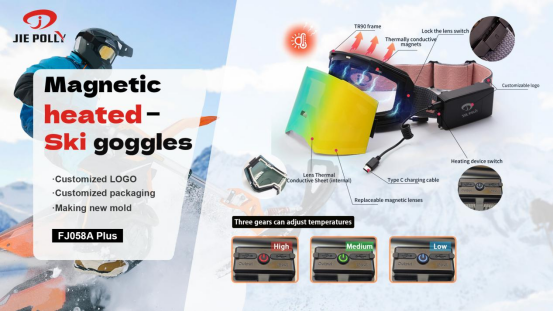
Heated Ski Goggles for Snowmobiles: Core Functions and Unmatched Riding Benefits
For snowmobile enthusiasts, riding across frozen tundra or down snow-covered mountain trails is an exhilarating experience, but it also comes
with unique vision challenges that can turn a fun adventure into a dangerous situation. Among all the essential gear a snowmobile rider needs, heated ski goggles stand out as a game-changing innovation that addresses the most common and dangerous issue riders face:
fogging and frost buildup. Understanding the core functions and key benefits of these specialized goggles can help any rider make a smarter
investment in their safety and comfort on the trail.
The most fundamental and critical function of heated ski goggles for snowmobiles is proactive anti-fog protection. Unlike traditional anti-fog coatings or double-layer lens designs that only work for short periods in mild conditions, heated goggles use integrated, low-power
heating elements embedded around the frame or directly into the lens to maintain a consistent temperature on the inner lens surface.
Fog forms when warm, moisture-rich air from a rider’s breath and perspiration meets the cold inner surface of the lens,
causing water vapor to condense into tiny droplets that blur vision. On long snowmobile rides, especially in cold or humid weather, traditional
anti-fog solutions quickly fail as temperatures drop and moisture builds up. Heated goggles eliminate this problem at the source by keeping
the lens temperature above the dew point, preventing condensation from forming in the first place. This continuous anti-fog performance
means riders never have to deal with sudden fogging that can cause instant loss of vision, a major hazard when riding at high speeds over
uneven terrain.
A second core function of heated goggles is frost and ice prevention in extremely cold conditions. When temperatures drop well below freezing even tiny amounts of moisture can freeze on the outer lens surface, creating a opaque layer of ice that blocks vision completely. Heated lenses maintain a surface temperature that stops ice from forming and melts any accumulated frost, keeping the lens clear even during multi-hour
rides in sub-zero weather. This function is especially valuable for riders who enjoy backcountry snowmobiling or night riding, where stopping
to clear ice off your goggles can expose you to dangerous wind chill and leave you stranded in an isolated area.
Beyond vision protection, heated ski goggles also deliver meaningful comfort benefits for snowmobile riders. The consistent gentle heat from
the goggles warms the area around your eyes and face, reducing the stinging discomfort of frigid wind and lowering the risk of frostnip on
exposed facial skin. Unlike bulky layered gear that can restrict movement or cause overheating elsewhere on the body, the targeted heat from
goggles just warms the area that needs it most, keeping you comfortable without adding unnecessary bulk.
Finally, heated ski goggles are designed to work seamlessly with the specific demands of snowmobiling. Many models integrate heating
technology with other rider-focused features, like interchangeable tinted lenses for adapting to changing light conditions, UV protection
to block harsh reflected sunlight from snow, and durable, lightweight frames that fit comfortably over helmets. All these features work together with the core heating function to create a safer, more enjoyable riding experience for beginners and advanced enthusiasts alike.
In conclusion, heated ski goggles are far more than a luxury upgrade for snowmobile riders. They are a critical safety gear that solves the most persistent vision hazards of cold-weather riding, while adding comfort and convenience that make every ride more enjoyable.
For anyone who spends serious time on a snowmobile, investing in a quality pair of heated goggles is one of the best decisions you can make
to protect yourself and enhance your time on the trail.